

Transport Fever 3: Workers can significantly boost your industries’ production!

Transport Fever 3 has significantly expanded the industrial system compared with its predecessor. One of the most interesting new features is that industries can no longer grow or become more efficient exclusively through their raw-material supply.
Since its release on September 29, 2026 industries can also be enhanced by so-called boosters . Workers are one of these boosters. This means that if you bring enough people to an industry, its production output can rise above the normal level.
That sounds simple at first, but it changes planning more than you might expect. A factory is therefore no longer just a destination for trucks or freight trains. Suddenly, the question of how employees get to their workplace becomes important too.
Transport Fever 3 already simulates its inhabitants in considerably more detail than its predecessor. Every resident has a home, a workplace and other destinations they visit in everyday life. This individual simulation forms the basis for connecting workplaces and commuter traffic more closely.
For you, this primarily means that a productive industry can benefit if it is not located somewhere completely isolated at the edge of the map, but is instead sensibly connected to passenger transport.
For example, you could have a bus line run from a nearby city to an industrial area, or establish a rail connection through which larger numbers of employees arrive. The actual challenge is then to integrate the additional passenger traffic into the existing network without creating a new bottleneck.
It is important not to confuse the worker booster with a mandatory basic requirement. An industry does not automatically stop production entirely simply because you have not set up an additional worker line for it.
Workers instead serve to increase production beyond the normal level. Anyone already producing enough goods therefore does not necessarily need to provide every factory with its own commuter connection.
That is precisely where the system’s strategic appeal lies. A factory that is already well utilized can either be supported by new sources of supply – or you can try to push the existing facility harder with a booster.
This can be particularly interesting for rare or distant industries. Instead of connecting a second factory via a new freight route stretching for miles, it might be more economical to make an existing facility more productive.
However, workers are not the only booster.
For raw-material industries certain goods can also increase production. Agricultural operations, for example, can be supported with fertilizer. At mines, tools or machine parts can increase extraction.
This creates several ways to solve the same economic task. You can establish new supply chains, connect additional industries or specifically strengthen existing production sites.
However, the system has one drawback: More production also means more traffic.
When an industry is utilized more heavily through additional workers or materials, correspondingly more goods have to be picked up. This requires additional vehicles and possibly larger or specialized stations.
Urban Games explicitly cites increased pollution, more noise, and additional vehicle and infrastructure requirements as possible disadvantages of such boosters.
That is precisely why a booster is not automatically the best solution every time.
If you ramp up an industry massively in the middle of a sensitive urban area, the additional strain can cause new problems elsewhere. More trucks mean more traffic, additional stations require space, and more heavily utilized facilities can worsen environmental figures.
This turns what is actually a simple decision into an economic trade-off: Is it really worthwhile to push the existing factory to its maximum, or would a second production facility in a more favorable location be more efficient in the long term?
Transport Fever 3 thus attempts to treat industry as more than just a static source of goods. Production sites are increasingly becoming real hubs where freight, passenger and infrastructure planning come together.
The new demand-driven industrial system is another factor. At the beginning, small settlements require only comparatively simple goods. As the population grows, not only does the quantity of demanded products increase, but so does their variety.
Later, cities may require considerably more complex supply chains. New industries dynamically emerge on the map to match this demand. As a result, a transport network that worked excellently for ten in-game years may suddenly reach its limits at some point.
That is precisely when boosters become interesting.
When a rapidly growing city suddenly needs significantly more goods, you will not necessarily have enough additional production sites available immediately. Strengthening an existing industry with workers and other additional resources can then be one way to create extra capacity in the short term.
At the same time, the system demonstrates quite well how closely passenger and freight transport are now connected. A bus line to an industrial area is no longer merely a nice addition to a realistic cityscape, but can directly affect your goods production.
This should be particularly interesting for players who have previously played Transport Fever in two relatively separate areas: passenger transport here, freight transport there. Transport Fever 3 connects the two areas more closely.
Anyone who has mainly planned industrial areas according to how easily trucks or freight trains can reach them will therefore have to rethink their approach. A good production site may need not only tracks and loading ramps, but also a sensible connection to the residential areas of its workers.
This creates a small but remarkably effective new question for every larger factory: How do the people who keep this place running actually get here?
Transport Fever 3 has been available for PC, macOS, Linux, PlayStation 5 and Xbox Series X|S since September 29. You can also get the PC version from our partner Gamesplanet
Transport Fever 3 at Gamesplanet:
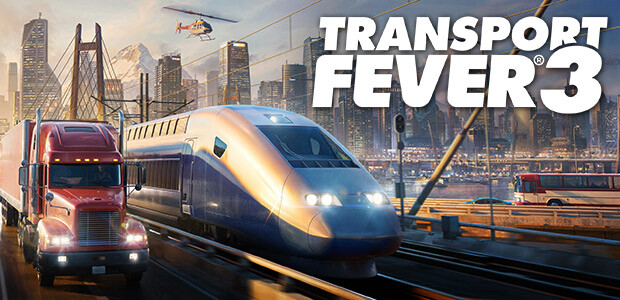
Transport Fever 3 Steam Key für PC, Mac und Linux online kaufen
Transport Fever 3, der ultimative Transport-Tycoon, ist zurück: grösser, tiefer und dynamischer als je zuvor. Meistere die Verkehrsinfrastruktur, kontrolliere…
de.gamesplanet.com
When you purchase through this link, you support Simulatoren-News without incurring any additional costs.
Are you already using worker boosters strategically, or do you prefer to build additional industries as soon as production is no longer sufficient?







About the Author

Ich bin der fleißige Schreiber der Artikel für die Simulatoren-News.
Falls ihr Fragen zu Artikeln etc. habt, meldet euch bitte beim Team über das Ticketsystem oder gerne auch per WhatsApp: +49 1567 8431507.
Simulatoren-News
Butler

Categories
- Truck 595
- Farming 35
- Airport 11
- Strategy 33
- City Bus Manager 7
- Cities: Skylines 6
- Bus 692
- Train 802
- LOTUS 21
- City Transport Simulator (Bus + Tram) 244
- Other simulations 210
- Community Verdict 7
- Surveys 3
- Hardware, Technology, etc. 47
- Mobile games 5
- Events 8
- Giveaways 19
- All about our platform 16
- Reset Filter
Comments