

Who actually owns astragon? The business side behind Bus Simulator, Construction Simulator, and more!

Many players know astragon primarily through games where work is being done: driving buses, managing construction sites, patrolling, putting out fires. At first, that sounds like a classic simulation niche, like yellow excavators, timetables, blue lights, and quite a lot of buttons. But behind astragon today there is no longer just a German publisher releasing a few special games for a loyal target group. astragon is now part of a larger international group – and that is exactly what makes the matter exciting. Because if you ask yourself why simulations increasingly feel like long-term brands, DLC platforms, and predictable business models, then it is worth looking at the company structure behind them.
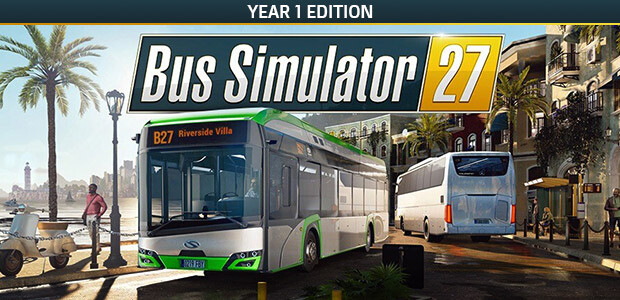
astragon Entertainment was founded in 1998 and today describes itself as one of the leading German games publishers in the field of sophisticated “Working Simulation Games.” These include well-known brands such as Construction Simulator, Bus Simulator, Police Simulator, and Firefighting Simulator. What matters here is: astragon does not simply publish any small niche games, but occupies a fairly clear field. It is about everyday life, work, vehicles, technology, tasks, progress, and often also cooperative gameplay. Exactly this mix is interesting for many simulation fans because they are not just looking for a game for one weekend, but for a topic they can return to again and again.
The major turning point came in early 2022. Back then, astragon was acquired by the Team17 Group. The deal was valued at up to 100 million euros, or up to 83 million pounds. For the simulation industry, that is a remarkable figure because it shows: work simulations are no longer just a nice side topic for specialists. They are interesting enough for larger publishers to put a lot of money on the table for them. Team17 stated at the time that the acquisition was specifically intended to enable entry into a new and complementary simulation category. In other words: astragon was not just a random purchase, but a strategic move into a genre that can be predictable, long-lived, and commercially attractive.
Since 2025, the former Team17 Group has officially been called everplay group plc. At first, that sounds like just a name change, but it is important for the classification: astragon is now a wholly owned subsidiary of everplay and stands there alongside other areas such as Team17 and StoryToys. everplay describes astragon as a publisher, developer, and distributor for sophisticated work simulations, with target audiences ranging from young enthusiasts to technical experts and casual players. That is exactly where the core lies: astragon is not just a game brand, but its own pillar within a larger corporation.
For players, this structure is not automatically good or bad. But it explains why astragon games often work in a very brand-conscious way. Bus Simulator, Construction Simulator, or Police Simulator are not random individual projects, but series that can be expanded over the long term. A new game brings visibility, followed by updates, DLCs, editions, console versions, discounts, bundles, and new target groups. Construction Simulator in particular shows pretty well how such a model works: base game, additional machines, brand licenses, expansions, Gold or Titanium Editions. For players, this can be attractive because a game is maintained for longer. But it can also quickly create the feeling that the next bill is waiting right after the purchase.
It is also exciting that astragon does not only do publishing, but is now moving more strongly toward its own development. Since 2023, the German studio Independent Arts Software has belonged to astragon; it now appears as astragon Development. astragon itself describes this step as a strategic strengthening of its own simulation brands. This is important because a publisher thereby becomes less merely a distributor of external projects and more involved in the creation of its brands itself. For players, this can mean in the long term: more control over quality, technology, content, and roadmaps. But it can also mean that brands are thought about even more strongly according to portfolio logic: What fits the group? What can be expanded? What can work on PC, console, and perhaps later in other formats?
This is exactly where astragon becomes interesting as a business case for the simulation industry. While many players first talk about realism, vehicles, maps, controls, or DLC prices when it comes to simulations, publishers see another layer: simulations often have a clear target group, long sales phases, and good expansion opportunities. A bus game is not “finished” after the first release if you can add new vehicles, new maps, new brands, new tasks, or new platforms. A construction simulator can live on through machine packs, construction sites, campaigns, and editions. A police simulator can receive new districts, vehicles, missions, or systems. That is not a coincidence, but a business model.
The decisive difference from many classic action or story games lies in returning players. Simulation players do not just buy a campaign and then put the game away. Many come back when new content appears, when a discount is running, when a DLC brings a favorite brand, or when an update addresses old criticism. That is exactly why simulations are interesting for companies like everplay. They do not always deliver the biggest hype peaks, but they can serve a stable, recognizable, and predictable niche. And astragon has built up brands in this field over the years that are immediately understandable: driving buses, building, patrolling, putting out fires. You do not have to explain that to anyone for ten minutes.
For the community, this has two sides. On the one hand, a larger group in the background can help. More international reach, more platforms, more experience in distribution, more marketing, more trade fair presence, and more security for larger projects. On the other hand, with such structures, the pressure naturally grows that brands have to deliver regularly. A new Bus Simulator game is then not just a passion project for bus fans, but part of a long-term product strategy. This is exactly where the debates often arise that we constantly see in the simulation scene: Why does this DLC cost so much? Why is the next part already coming? Why does a game feel more accessible on console than on PC? Why are there editions, season passes, or large bundle packages?
That is why astragon should not only be seen as “the publisher of Bus Simulator.” astragon is an example of how professional and economically relevant the simulation niche has become. In the past, work simulation sounded to many outsiders like a curious shelf in an electronics store. Today, it has become an international business with well-known brands, real licenses, console versions, and corporate structures. The fact that Team17, or today everplay, bought astragon shows pretty clearly: These games are not small because they are special. They are interesting precisely because they are special.
In the end, the most important question for players remains: What of this actually reaches us? A strong company structure can enable better production, larger projects, and longer support. But it can also lead to stronger monetization, more cautious design, and more brand thinking. With astragon, this balance will have to be watched closely in the coming years. Bus Simulator, Construction Simulator, Police Simulator, and the other brands have clear target groups and enormous expansion potential. What will matter is whether this creates games that truly evolve for fans – or whether at some point the business logic feels louder than the actual game.
How do you see it: Is it better for simulation games if a publisher like astragon is part of a larger group – or is that exactly what makes the games more predictable, more expensive, and less daring in the end? Do you regularly play games from astragon? Do you know astragon more through Bus Simulator or Construction Simulator?








About the Author

Ich bin der fleißige Schreiber der Artikel für die Simulatoren-News.
Falls ihr Fragen zu Artikeln etc. habt, meldet euch bitte beim Team über das Ticketsystem oder gerne auch per WhatsApp: +49 1567 8431507.
Simulatoren-News
Butler


Comments